
Ever wondered what sets the stage for a child’s future? Welcome to the intriguing world of early childhood education. The 15th edition of Early Childhood Education Today unpacks the latest trends, the historical context, and why investing in these tender years is crucial for society at large. Striking the right balance between educational rigor and playful exploration can seem like juggling flaming torches on a unicycle, but don’t worry, we’ll explore how the pros do it seamlessly.
Overview of Early Childhood Education
Historical Context and Evolution
Early childhood education has roots that stretch back centuries, beginning with philosophers like John Dewey and Maria Montessori, who believed in child-centered learning. Their ideas laid the foundation for many modern practices. Over time, the landscape evolved significantly, responding to changing societal needs and scientific understanding of child development. Today, we witness an integration of systemic frameworks that value play-based learning intertwined with academic skills, driven by developmental research.
Current Trends in Early Childhood Education
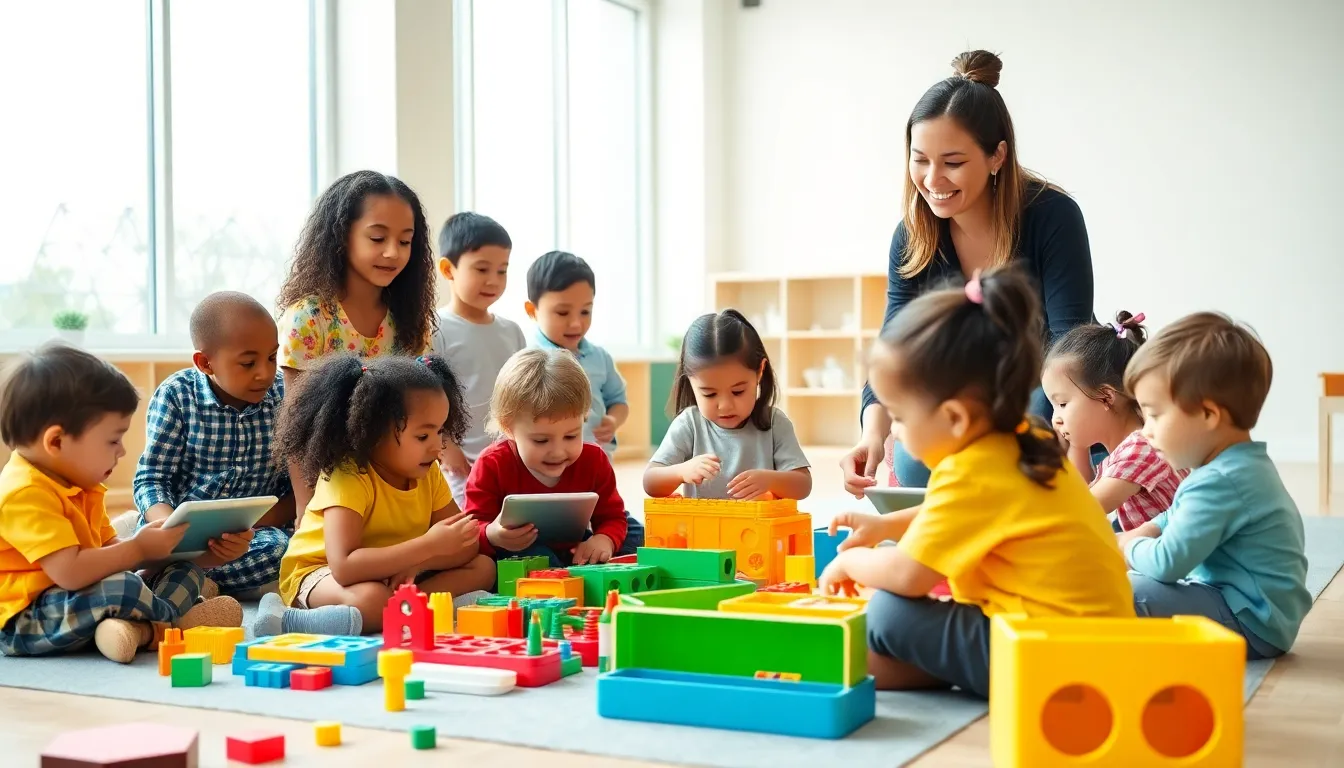
Flash forward to today, and educators are embracing various approaches that innovate how children learn. From incorporating technology in classrooms to promoting inclusive environments for diverse learners, early childhood education is now more dynamic than ever. Also, practices emphasizing social-emotional learning are gaining traction, guiding children not just through academics but into becoming well-rounded, emotionally intelligent individuals.
Importance of Quality Early Childhood Education
Impact on Child Development
Quality early childhood education is arguably pivotal for holistic child development. Research consistently shows that children exposed to high-quality programs experience enhanced cognitive and social skills. These early experiences shape their trajectory, leading to better educational outcomes, higher graduation rates, and improved health indicators down the road. The foundation built during these formative years is irreplaceable.
Societal Benefits of Early Education
The societal ripple effects of investing in early childhood education are profound. Studies indicate that countries providing robust early education systems tend to enjoy reduced crime rates, lower welfare dependency, and greater economic productivity. When children thrive, communities flourish, creating a cycle of success that benefits everyone.
Key Components of Effective Programs
Curriculum and Instructional Strategies
At the heart of effective early childhood education programs lies a thoughtfully crafted curriculum. Integration of play-based activities, literacy, and numeracy in engaging ways helps children grasp foundational concepts without feeling like they are being schooled. Instructional strategies are also evolving, with an increasing focus on individualized learning pathways that cater to each child’s unique strengths and interests.
Teacher Training and Professional Development
Equally important is the ongoing professional development of educators. Rigorous training equips teachers with the skills and knowledge needed to carry out curricula effectively and respond to the diverse needs of their classrooms. Investing in teachers’ growth not only enhances program quality but also fosters a culture of continuous improvement.
Family and Community Involvement
Building Strong Partnerships
A successful early childhood program doesn’t exist in a vacuum. Strong partnerships between educators, families, and communities serve as the backbone of effective early childhood education. When families actively engage, children benefit immensely. Informative workshops and shared activities can strengthen these bonds, making families part of the educational journey.
Engaging Families in the Learning Process
Also, practical strategies can help parental involvement. Providing resources that guide parents on how to support their children’s learning at home creates a collaborative environment that fuels educational success. When parents and educators work hand in hand, it crafts an ecosystem of support that nurtures children both in the classroom and at home.