
Silverback gorillas are among the largest primates on Earth, captivating wildlife enthusiasts and researchers alike with their impressive size and strength. These magnificent creatures, known for their distinctive silver hair on their backs, play a crucial role in their social groups and ecosystems. But just how tall do these powerful animals stand?
On average, adult silverback gorillas reach heights of 4.5 to 5.5 feet when standing upright. Their towering presence, combined with their muscular build, makes them a sight to behold in the lush forests of Africa. Understanding their size not only highlights their physical dominance but also sheds light on their behavior and habitat needs.
Overview Of Silverback Gorillas
Silverback gorillas represent the dominant male of a gorilla troop and exhibit significant physical characteristics that underline their status. Adult male silverbacks can weigh between 300 to 485 pounds, displaying strong muscular builds. In addition to their impressive height of 4.5 to 5.5 feet when standing, their arm span reaches up to 8 feet, enabling agility and strength.
The distinctive silver hair on their backs appears as they mature, symbolizing their role as leaders. These gorillas possess a social structure that revolves around family groups, often including multiple females and their offspring. Their size and physical capabilities allow them to protect their troop and secure resources within their habitat.
Understanding the dimensions of silverback gorillas is essential for conservation efforts. Their physical stature reflects their habitat requirements, predominantly found in dense forests of central Africa. Knowledge of these aspects aids in developing strategies to ensure the survival of this impressive species as they face threats from habitat loss and poaching.
Average Height Of Silverback Gorillas
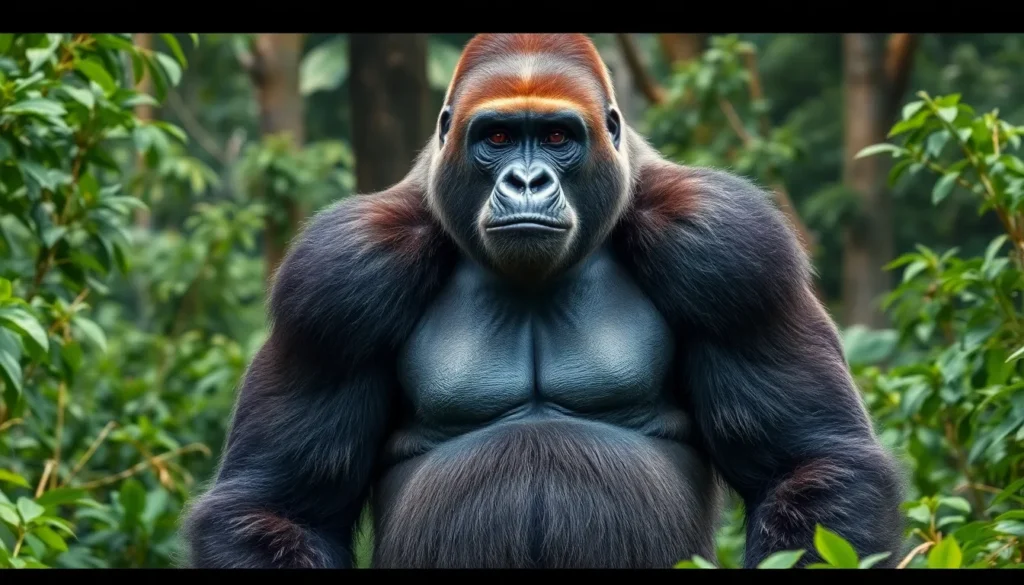
Adult silverback gorillas exhibit a remarkable range in height. On average, males stand between 4.5 to 5.5 feet tall, while females are generally shorter.
Male vs. Female Height Differences
Male silverback gorillas typically reach heights ranging from 4.5 to 5.5 feet, with some exceptional individuals standing slightly taller. Females, in contrast, average between 4 to 5 feet tall. The size difference is significant, with males averaging around 400 pounds and females about 200 pounds. This disparity reflects their distinct roles within social structures, where larger males assert dominance and protect their troops.
Factors Affecting Height
Several factors influence the height of silverback gorillas. Genetics play a crucial role, as inherited traits determine growth potential. Nutrition also significantly impacts height; a balanced diet rich in fruits, leaves, and stems supports optimal growth. Environmental conditions, including habitat quality and availability of resources, affect the overall health and development of gorillas. Furthermore, age contributes to height; younger individuals may still be growing, while older gorillas may reach their maximum size. Understanding these factors is essential for conservationists aiming to protect and manage gorilla populations effectively.
Habitat And Its Influence On Size
Silverback gorillas inhabit dense forests and mountainous regions in Central Africa, primarily in the Democratic Republic of Congo, Rwanda, and Uganda. Their habitat significantly influences their physical size and overall health. The availability of food resources, such as fruits, leaves, and stems, directly impacts their growth and weight.
Diet affects size variation among gorillas. A nutrient-rich diet promotes robust growth, while inadequate food supply leads to stunted development. For example, silverbacks in regions with plentiful vegetation tend to reach the upper height range of 5.5 feet and weigh closer to 485 pounds. Conversely, those in areas with food scarcity may average closer to 4.5 feet in height and weigh around 300 pounds.
Environmental factors also play a crucial role in size. Altitude affects oxygen levels, influencing gorilla physiology. Gorillas residing at higher elevations may experience slower growth rates compared to those at lower altitudes. Climate conditions, such as rainfall and temperature, can impact vegetation health, further affecting dietary availability.
Social dynamics and habitat density can also influence size and health. In crowded areas with increased competition for resources, gorillas may exhibit increased stress levels, affecting their overall well-being. Maintaining healthy habitats ensures that silverback gorillas can thrive and reach their optimal size. Conservation efforts focused on habitat preservation directly contribute to the survival and health of silverback gorillas in the wild.
Comparing Silverback Gorillas To Other Primates
Silverback gorillas stand out among primates due to their impressive size. When comparing them to other primates, such as chimpanzees and orangutans, the differences become evident.
Size Comparison With Chimpanzees
Silverback gorillas are significantly larger than chimpanzees. Adult male chimpanzees measure approximately 4.5 feet tall when standing and weigh between 70 to 130 pounds. In contrast, adult male silverbacks typically measure between 4.5 to 5.5 feet tall and weigh between 300 to 485 pounds. This substantial size difference highlights the silverback’s dominance within the primate family.
Size Comparison With Orangutans
When compared to orangutans, silverback gorillas also demonstrate notable size advantages. Adult male orangutans, on average, stand around 4.5 feet tall and weigh between 80 to 200 pounds. Again, silverback gorillas exceed these measurements significantly, further establishing their status as one of the largest primates. The robust physical characteristics of silverbacks serve as important adaptations for their roles in social structures and environmental challenges.
Silverback gorillas stand as remarkable examples of strength and social structure in the animal kingdom. Their impressive height and weight not only define their physical presence but also play a crucial role in their social dynamics. As dominant males, they protect their families and maintain stability within their groups.
Understanding the factors that influence their growth and health highlights the importance of conservation efforts. By preserving their habitats and ensuring access to nutritious food, we can support the survival of these magnificent creatures. The ongoing commitment to their protection is vital for maintaining the delicate balance of their ecosystems and the future of silverback gorillas.